Products
Industrial Crossover Platforms & Step-Overs
Industrial crossover platforms and step-over routes for conveyors, pipe racks and retrofit obstacles where deck span, clearance and guardrail scope must be checked together.
Primary international naming
Regional standards guidance
Metric / imperial toggle
Direct technical downloads
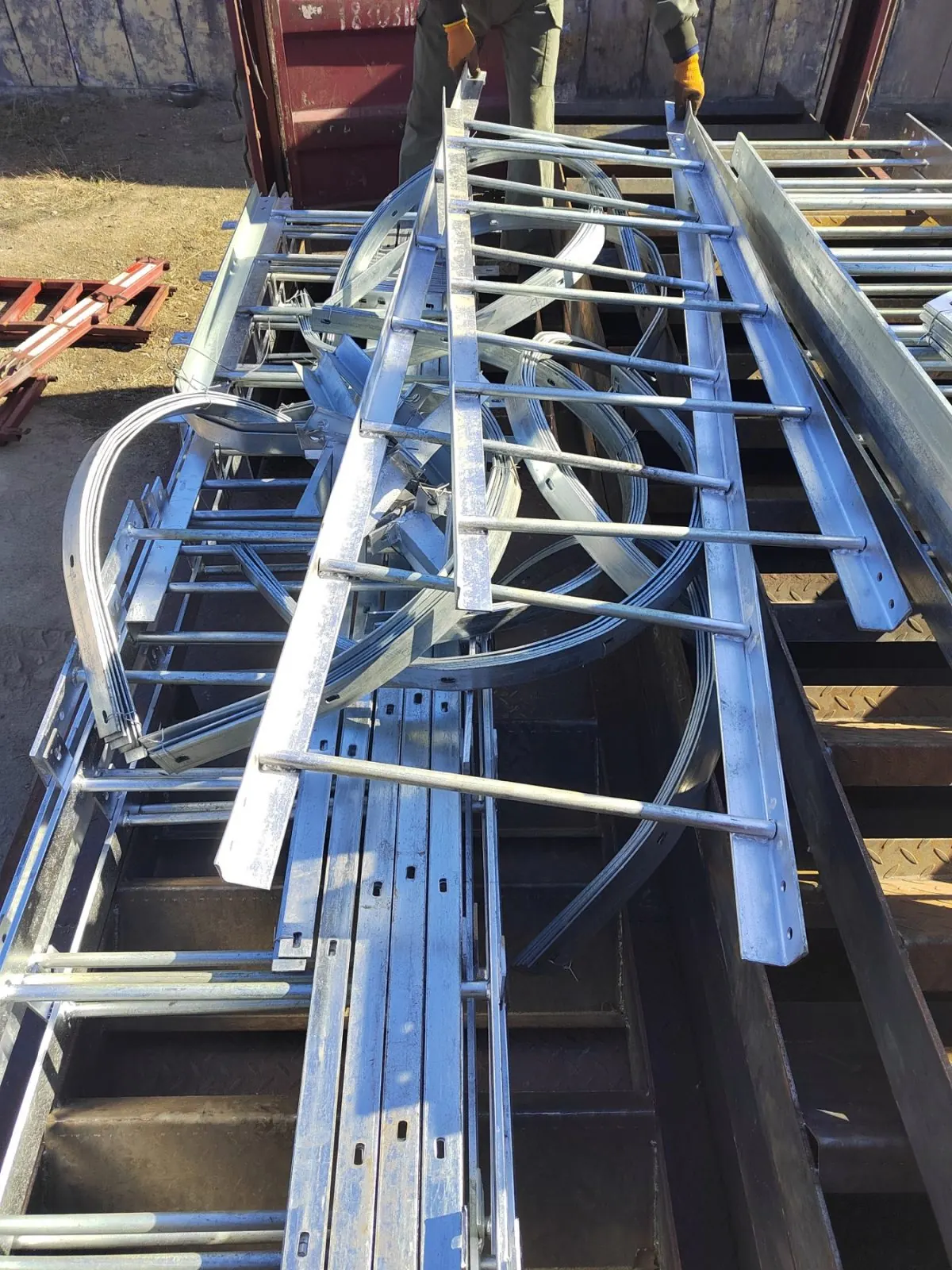
Why send the first file now
Send obstacle width and clear-span notes first
Crossover RFQs improve when the first sketch already shows what must stay clear below and how the route enters / exits.
- Obstacle width, clear span and required headroom
- Rise on each side and operator frequency
- Retrofit split limit, access doors or installation-sequence note
When finish or shipping takes over
Keep the route review first, then move into finish and packing only when the geometry is stable
Material route currently shown on this page: Carbon steel / SS304 / SS316.
Surface finish note currently shown on this page: Hot-dip galvanized / SS304.
Support files and references
Keep the next step practical instead of opening three different CTA paths
Quick project snapshot
Units
Selection notes
What buyers usually decide before this product moves into quotation review
These points are product-specific, so the engineering thread starts from the real site decision instead of from a generic catalog request.
Choose this route when
The site needs to clear conveyors, pipework or service lines instead of forcing operators to climb around obstructions.
Clearance review first
Obstacle width, clear span, operator frequency and headroom need to be confirmed before the stair and bridge modules are split.
Retrofit note
Existing plant retrofits often need tighter module lengths, tagged rail sections and staged installation logic for shipment and site handling.
Drawing-ready input template
What to mark on a crossover drawing before you send it
Crossover RFQs get specific much faster when the obstacle geometry and site-retrofit limits are already marked on the drawing.
Obstacle width and height
Mark conveyor, pipe rack or service-line width plus the minimum clearance that must stay free below the crossing.
Approach on each side
Show whether both sides need steps, if one side is already elevated, and where the operator enters and exits.
Headroom and daily flow
Note operator frequency, headroom limits and any need to avoid blocking routine plant movement.
Retrofit split
If the structure must pass through existing doors, aisles or shutdown windows, note that early so module split is planned correctly.
01
Obstacle width
02
Clear span
03
Entry / exit side
Marked-up sketch preview
What a useful crossover markup usually looks like
For crossover routes, buyers should mark what must stay clear below as early as they mark the stair itself.
Obstacle width
Show the real conveyor, pipe rack or service-line span to cross.
Clear span
Mark the free zone that cannot be blocked below the bridge.
Entry / exit side
Show which side operators approach from and leave toward.
Best first file
Obstacle-clearance template
Defines obstacle width, clear span, headroom and retrofit split before crossover platform review.
Standards review
Project standards can be reviewed before quotation is finalized
The page makes the target-market standard route explicit so buyers know the technical review can start from project standard, ISO and local-code expectations.
OSHA access-route review
Access stairs, crossover units and work platforms are reviewed as route packages, while ladder components inside the route still fall back to OSHA 1910.23 ladder requirements and 1910.28 fall-protection duty where applicable.
EN ISO 14122-3 / CE path
Industrial stairs and work platforms can be coordinated against EN ISO access-route logic, with CE-related documents prepared only when the tender requires them.
AS 1657:2018 route check
Stair angle, tread geometry, handrails and platform protection can be reviewed against AS 1657:2018 style requirements for project approval.
Alternative terminology used in specifications
Crossover ladder, crossover stair and step-over platform all refer to the same objective: crossing pipework, conveyors or other obstructions safely.
Crossover platform ladders
Crossover ladder
Crossover stair
Step-over platform
Crossover structures are used to step over pipework, conveyors or plant obstructions without forcing unsafe shortcuts through the production area.
Span, platform clear width, guardrail configuration and loading assumptions determine the module split and the export packing strategy.
Applications
- Conveyor line crossovers
- Pipeline bridging
- Cable tray crossings
Configuration options
- Crossing span and clear width
- Stair approach on one or both sides
- Guardrail and toe-board arrangement
- Module split for freight and installation
Materials & finishes
- Base material: Carbon steel / SS304 / SS316
- Surface finish: Hot-dip galvanized / SS304
- Base material is usually reviewed as carbon steel, SS304 or SS316.
- Surface finish is usually reviewed as HDG, painted, brushed, polished or an anti-corrosion system matched to the project basis.
- Material route means the combination of base material and surface finish selected for the actual service environment.
Dimensional inputs
- Obstacle width and crossing span
- Platform clear width
- Approach rise on each side
- Loading and clearance requirement
Support files before quoting
Start with one must-read file, then open the related references only if needed
The product-specific worksheet stays first. Broader CAD, material and packing references remain behind it so the first click stays tied to the actual route on this page.
Obstacle-clearance template
Defines obstacle width, clear span, headroom and retrofit split before crossover platform review.
Engineering drawing reference
Reference drawing pack for stair geometry, platform transitions, support points and installation notes before the final layout is released.
Reference CAD file
2D reference CAD file for stair, crossover or platform layout discussion before the project drawing is finalized.
Why global buyers shortlist this
Project fit
Bridge and stair modules prepared around site clearance
Finish path
Base material: Carbon steel / SS304 / SS316. Surface finish: Hot-dip galvanized / SS304. Material route follows the combination approved for the project environment.
Standards-ready
OSHA access-route review path / EN ISO 14122-3
Drawings / CAD request
General CAD, material and packing references stay available after the worksheet
Once the route-specific worksheet is clear, these broader files help engineering teams compare drawing style, material references and shipping preparation without stealing the first-click position.
Engineering drawing reference
Reference drawing pack for stair geometry, platform transitions, support points and installation notes before the final layout is released.
Reference CAD file
2D reference CAD file for stair, crossover or platform layout discussion before the project drawing is finalized.
Material data reference
Reference file separating base-material choices from surface-finish routes for industrial outdoor and process environments.
Export packing and container planning
Reference packing dimensions, module split logic and 20GP / 40HQ planning workflow for fabricated stair and platform shipments.
Case Studies
Relevant project case studies
These case studies help buyers validate mounting logic, route format, finish direction and delivery scope before final quotation.

Crossover Platform for Logistics Obstacle Clearance
Helps position step ladders and crossover structures for warehouse-style access routes that must clear obstacles safely.
Learn more
Maintenance Platform for Equipment-Side Inspection
Useful when buyers need to visualize working area, platform deck arrangement and delivery scope for maintenance access.
Learn more
Corrosion-Resistant Access Route for Coastal Maintenance
Useful when buyers need to compare HDG and stainless steel choices for lifecycle planning on overseas industrial projects.
Learn moreProducts
Compare nearby product routes
If this product is close but not final, these nearby routes are the best next comparison.
Equipment Maintenance Platforms
Maintenance platforms that create stable working space around equipment, tanks and process modules.
Learn more
Heavy-Duty Caged Fixed Ladders
Heavy-duty caged fixed ladders for permanent vertical access, modular shipment and drawing-based project review.
Learn more
Roof Access & Parapet Ladders
Roof access and parapet ladder packages for rooftop maintenance, parapet transition and building service routes.
Learn moreGallery

FAQ
Can you make custom sizes?
Yes. The preferred workflow is drawing-based fabrication. Buyers can send ladder height, bracket conditions, material, finish, and quantity.
What should be included in a drawing-based RFQ?
Useful inputs include height, width, bracket condition, installation surface, material, finish, quantity, and any local project standard.
Do you provide installation guidance?
Yes. The launch site positions the factory as able to support installation communication with drawings, part identification, and practical assembly guidance.